Reservation
Online
Integer congue malesuada eros congue varius. Sed malesuada dolor eget velit pretium. Etiam porttitor finibus. Nam suscipit vel ligula at dharetra
Error: Contact form not found.
Integer congue malesuada eros congue varius. Sed malesuada dolor eget velit pretium. Etiam porttitor finibus. Nam suscipit vel ligula at dharetra
Error: Contact form not found.

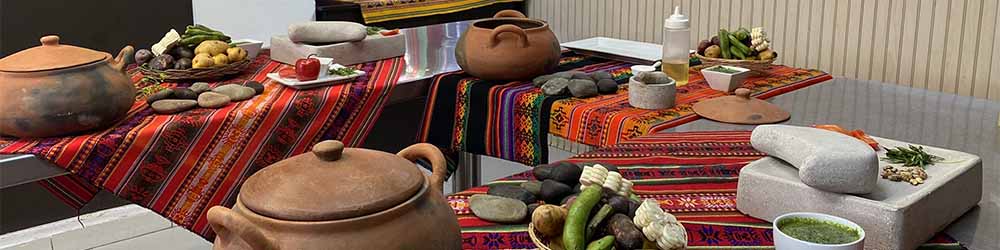
To understand Pachamanca, you must first understand something deeper than food. You must understand the relationship between people and the earth.
In the Andes of Peru, Pachamanca is not just a dish — it is part of an ancient ritual connected to Pachamama, Mother Earth, and the agricultural cycles that have sustained life for centuries. For those exploring Peruvian gastronomy, this is where food becomes meaning.
In the Andean world, August marks a powerful moment in the agricultural calendar. It is the time when the land is prepared for a new cycle. After months of rest, the soil is opened, turned, and made ready to receive seeds that will later grow with the arrival of the rains in the following months. This period is not only agricultural — it is symbolic. It represents renewal, hope, and the beginning of life.
Traditionally, communities would come together during this time to work the land. It was a collective effort: families, neighbors, entire communities. All participated in preparing the lands for the next season. After long hours of labor, what followed was not just rest — but celebration. This is where Pachamanca takes its true meaning.
A hole was dug into the ground, and above it, a structure of stones was carefully built, almost like a small dome. Inside, firewood was placed and burned for hours, heating the stones until they stored intense heat. Once ready, the firewood was removed, and the ingredients were placed inside:
Everything was then covered with cloths and earth, allowing the food to cook slowly using the heat of the stones. This method created flavors that were deep, natural, and infused with the earth itself.
One of the most important aspects of this Andean tradition was not the cooking itself — but what it represented. When the Pachamanca was ready, only part of the food was taken out to be shared among the community. The rest was left in the earth. This act symbolized a fundamental Andean principle: RECIPROCITY… A gesture that could be understood as: “Mother Earth, I feed you, so you may feed me.” It was a way of asking for abundance, protection, and a successful agricultural cycle.
With the arrival of the Spanish, new elements were introduced. Meats such as: beef, pork and chicken were incorporated into Pachamanca, transforming it into the version more commonly known today. However, in many Andean communities, the original meaning of the ritual remains alive. The dish evolved — but its essence did not disappear.
Pachamanca has always been a festive meal. On the grass or blankets, it is often accompanied by: fresh cheeses, sauces made with Andean peppers (ajíes) and, of course, no celebration would be complete without a drink: Chicha de jora, a traditional fermented corn beverage, is commonly shared during these gatherings — reinforcing the sense of community and celebration.
Today, Pachamanca is recognized as one of the most iconic dishes of Peruvian cuisine, but its true value goes far beyond flavor, it is a reflection of:
For travelers seeking meaningful food experiences in Peru, this tradition offers something rare: a connection not only with food, but with culture itself.
Even as Peru continues to evolve as a global culinary destination, traditions like Pachamanca remain deeply rooted in the Andes, They remind us that cooking can be more than technique… It can be memory, It can be identity, It can be a relationship with the world around us.
Cook, Learn, Enjoy and Taste Peru!
Comments are closed.