Reservation
Online
Integer congue malesuada eros congue varius. Sed malesuada dolor eget velit pretium. Etiam porttitor finibus. Nam suscipit vel ligula at dharetra
Error: Contact form not found.
Integer congue malesuada eros congue varius. Sed malesuada dolor eget velit pretium. Etiam porttitor finibus. Nam suscipit vel ligula at dharetra
Error: Contact form not found.

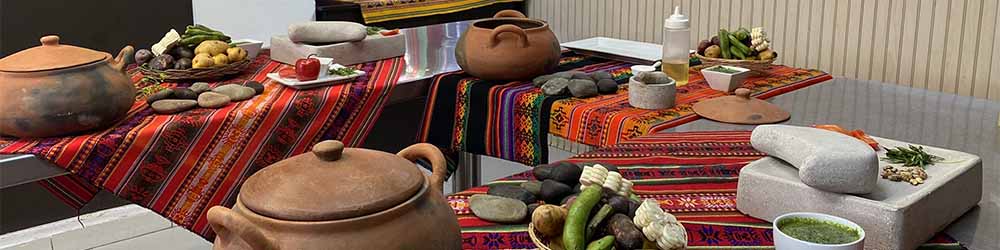
High in the Andes of Peru, food is more than nourishment. It is history, identity, and a reflection of one of the most biodiverse regions on Earth.
Long before modern trends turned the word superfood into a global concept, Andean communities were already cultivating and consuming ingredients that are now recognized for their exceptional nutritional value. These Andean foods were not created to follow a trend — they were developed through centuries of observation, adaptation, and deep knowledge of the land.
For travelers exploring Peruvian gastronomy, discovering these ingredients offers a deeper connection to the culture behind the cuisine.
The Andes present extreme conditions: high altitudes, intense sunlight, and dramatic temperature changes. Yet, instead of limiting agriculture, this environment has given rise to an extraordinary diversity of crops.
Over time, Andean civilizations learned how to work with nature rather than against it, developing a food system that is both resilient and remarkably rich. Many of the ingredients grown here are now considered some of the most valuable superfoods in Peru, not only for their flavor, but also for their nutritional benefits.
These ingredients were not consumed in isolation. Their importance was so great that many of them were traditionally brought together in a single preparation: Pachamanca — a dish that reflects the diversity and abundance of the Andes in one shared meal.
Peru is the birthplace of the potato, with thousands of native varieties cultivated across the Andes. These are not just variations in color or shape. Each potato carries its own texture, flavor, and culinary use. Some are soft and creamy, others firm and earthy, and many are perfectly suited for traditional preparations.
In dishes like Pachamanca, different types of potatoes are cooked together, allowing their textures and flavors to complement each other in a single, harmonious experience.
Beyond their versatility, potatoes are an essential part of Andean nutrition, providing energy and nutrients that have sustained communities for generations.
Corn, or maíz, holds a special place in Andean culture. From large-kernel varieties used for mote to the purple corn used in traditional drinks, this ingredient goes far beyond its role as food. In ancient times, corn was considered sacred and closely linked to rituals, agriculture, and community life.
It is also one of the essential components of Pachamanca, where it is cooked alongside other ingredients, absorbing the flavors of the earth and the surrounding elements.
No exploration of Peruvian cuisine would be complete without mentioning ají peppers. These are not just about heat. In fact, many varieties offer more aroma than spice, contributing depth, color, and character to countless dishes. In traditional preparations such as Pachamanca, ají peppers play a key role in marinades, enhancing the natural flavors of meats and vegetables while adding complexity and balance.
The Andes are also home to some of the most nutritious grains and legumes in the world.
Quinoa is perhaps the most internationally recognized, valued for its high protein content and balance of essential nutrients. Cañihua, smaller and less known, offers similar benefits and thrives in even harsher conditions. Tarwi, a protein-rich legume, has been consumed since pre-Columbian times and continues to be an important part of local diets.
These ingredients represent the foundation of what is now globally recognized as healthy food and balanced nutrition, rooted in ancient traditions.
What makes Andean superfoods truly special is not only their nutritional value, but the knowledge behind them. These ingredients are part of a system that connects agriculture, culture, and community. They are grown, harvested, and prepared using techniques that have been passed down for generations. When combined in dishes like Pachamanca, they reveal their full potential — not just as individual ingredients, but as part of a shared culinary identity.
To truly understand these ingredients, it is not enough to read about them, You need to see them, touch them, and taste them. From colorful varieties of potatoes to ancient grains and aromatic peppers, each ingredient tells a story. Together, they form the foundation of one of the most fascinating Cusco culinary traditions in the world.
For those seeking meaningful food experiences in Peru, exploring Andean ingredients is an essential part of the journey.
Cook, Learn, Enjoy and Taste Peru!
Comments are closed.